
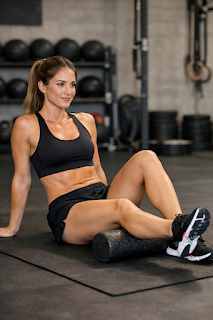
As a runner, you’re always chasing that next PB (Personal Best), whether it’s a faster mile or a longer distance. But true running potential isn’t just built on miles logged; it’s forged in smart preparation and diligent recovery. One of

the most effective, yet often misunderstood, tools in a runner’s arsenal is foam rolling.
As a retired Doctor of Chiropractic and an elite running coach, I’ve seen firsthand how proper myofascial release can transform performance, prevent injuries, and accelerate recovery. This isn’t just about rolling aimlessly; it’s about strategic application for every phase of your training.
What is Foam Rolling and Why Does it Matter?
Foam rolling is a form of self-myofascial release (SMR), essentially giving yourself a deep tissue massage. It works by applying pressure to specific points on your body to release muscle tightness and trigger points. Think of your muscles wrapped in fascia, a web-like connective tissue. When this fascia gets tight or sticky, it can restrict movement, cause pain, and even lead to injury.
For runners, this translates to:
-
Improved Flexibility: Better range of motion in key running muscles.
-
Reduced Soreness: Less post-exercise muscle pain.
-
Enhanced Blood Flow: Delivering vital nutrients and oxygen for repair.
-
Injury Prevention: Addressing minor tightness before it becomes a major problem.
The Strategic Art of Foam Rolling: When and How
The “proper way” to foam roll isn’t a one-size-fits-all approach. The timing and technique should adapt to your training phase.
1. Pre-Run/Pre-Practice: Dynamic Warm-up Enhancement
This phase is about preparing your muscles for action, not deep tissue work. Think of it as “waking up” your nervous system and improving blood flow.
-
Goal: Lightly activate muscles, improve pliability, and enhance range of motion.
-
Technique: Spend 30-60 seconds per muscle group. Use light to moderate pressure and keep moving. Don’t linger on one spot.
-
Focus Areas: Calves, hamstrings, quads, IT band, glutes.
-
Avoid: Deep, sustained pressure. This can temporarily reduce muscle power.
2. Post-Run/Post-Practice: Accelerated Recovery
This is where foam rolling truly shines for repair and reducing soreness.
-
Goal: Flush out metabolic waste, reduce muscle tightness, and restore tissue length.
-
Technique: Spend 1-2 minutes per muscle group, applying moderate to firm pressure. When you find a tender spot (a “trigger point”), hold the pressure for 20-30 seconds until the discomfort lessens by 50-75%.
-
Focus Areas: All major running muscles, especially hips (piriformis), glutes, IT band (gently!), quads, hamstrings, and calves.
-
Tip: Combine with static stretching for optimal results.
3. Pre-Race: Gentle Preparation
The day before or on race day, less is more. You don’t want to create any deep muscle soreness or fatigue (BIGGEST MISTAKE right here)
-
Goal: Gentle mobility and nervous system activation.
-
Technique: Very light, sweeping rolls, focusing on mobility rather than deep pressure. 30 seconds per muscle group, maximum. Don’t over do it!!!
-
Focus Areas: Calves, quads, and glutes.
-
Avoid: Any intense or prolonged rolling. Save the deep work for post-race.
4. Post-Race: The Ultimate Recovery Tool
After pushing your body to its limits, foam rolling is crucial for initiating repair and getting you back to training faster.
-
Goal: Address extensive muscle damage and tightness, reduce DOMS (Delayed Onset Muscle Soreness).
-
Technique: Start gently 1-2 hours after your race, or even the next day. Build to moderate pressure, holding on tender spots for 30-60 seconds.
-
Focus Areas: Every major running muscle, especially if you feel specific points of soreness. Pay extra attention to your feet (using a small ball), calves, and hamstrings.
-
Tip: Stay well-hydrated and follow with protein and carbohydrates.
My Clinical Recommendation
As a coach and former chiropractor, I often advise my athletes to view foam rolling as an integral part of their daily routine, just like brushing their teeth. Consistency is key. Even 10-15 minutes a day can make a profound difference in your longevity, performance, and ability to consistently hit new PBs.
Remember, listen to your body. Foam rolling shouldn’t be excruciating. If you experience sharp pain, stop. Consult with a sports medicine professional if pain persists.
Ready to unlock your full running potential? Incorporate these strategic foam rolling techniques into your routine and experience the difference that clinical precision can make.
Ready to achieve your personal best, guided by a coach who understands running from the inside out? Hire Coach Burger , an elite private running coach and retired Doctor of Chiropractic, who combines championship-level training with a professional mastery of human biomechanics.
Coach Burger brings an unparalleled understanding of functional movement and injury prevention to every session. This clinical approach ensures that not only do you train harder, but you train smarter and safer. Coach Burger’s core coaching philosophy is that most runners run too hard on their easy days and too easy on their hard days, ultimately failing to maximize their potential.
This strategic and biomechanically sound methodology yields exceptional results across all disciplines: Coach Burger’s athletes include twelve State Champion hurdlers, a State Champion 4x800m Relay Team, and eleven All-State distance runners (XC, 1600m, 3200m) as well as recreational runners from the 5k to the marathon. Whether you are targeting a marathon, improving track speed, or seeking an injury-proof running career, choose the coach with the clinical expertise to build you into a true champion.
You can reach Coach Burger at [email protected]. Look for his website runnersedgecoaching.com to launch soon.