
The Surprising Secret to Your Next PR:
Why You Need to Slow Down to Get Fast
Training slower to race faster might sound like a contradiction, but it is a
 |
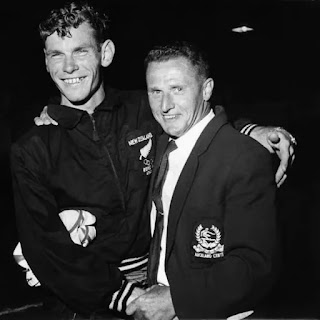
| Peter Snell and Arthur Lydiard 1962 after Snell breaks the World Record in the mile |
fundamental principle that changed the face of athletics forever. At its core is a philosophy that prioritizes building a massive aerobic engine before ever touching the “red line” of speed work.
By building upon the historical methods of the greats, we can unlock a level of performance that high-intensity training alone can never achieve.
In the 1950s and 60s, a New Zealander named Arthur Lydiard revolutionized distance running. At a time when the world was obsessed with grueling daily interval sessions, Lydiard proposed something radical: Marathon-style conditioning for everyone.
Lydiard’s “Boys”—a group of local neighborhood runners in Auckland—followed his high-mileage, aerobic-first approach. The result? At the 1960 Rome Olympics, they stunned the world by winning gold in both the 800m (Peter Snell) and the 5,000m (Murray Halberg). Lydiard proved that even for “shorter” distances, the size of your aerobic base determines the height of your peak.
Lydiard’s philosophy was built on a pyramid: the wider the base, the higher the peak. The aerobic system uses oxygen to break down fats and carbohydrates for a reliable energy source. When you train at a slower, “steady-state” pace, you teach your body to become highly efficient at utilizing oxygen. This is the bedrock of endurance.
One of the most significant biological benefits of this low-intensity approach is the increase in mitochondrial density. Mitochondria are the powerhouses of your cells, responsible for producing ATP (energy).
-
The Adaptation: Consistent slow training increases both the number and efficiency of these powerhouses.
-
The Result: Your muscles generate more energy aerobically, delaying fatigue and allowing you to sustain higher intensities during a race.
Lydiard was a proponent of “balanced” training. Training at a lower intensity puts significantly less strain on your joints and connective tissues than high-intensity speed work. This allows for the high volume of training necessary for elite performance while reducing the risk of overtraining or injury. By gradually building volume, you create a resilient body ready for the rigors of race day.
Beyond the physical, there is a mental discipline required to “train, not strain.” Lydiard coached his athletes to listen to their bodies and stay composed. Embracing the slow miles builds the mental fortitude and patience needed to stay calm in the “dark miles” of a race.
The Bottom Line
We aren’t just running slow; we are following a proven historical blueprint. By prioritizing the development of your aerobic system first—just as Lydiard’s champions did—you are making an investment in your future speed.
Ready to achieve your personal best, guided by a coach who understands running from the inside out? Hire Coach Burger , an elite private running coach and retired Doctor of Chiropractic, who combines championship-level training with a professional mastery of human biomechanics.
Coach Burger brings an unparalleled understanding of functional movement and injury prevention to every session. This clinical approach ensures that not only do you train harder, but you train smarter and safer. Coach Burger’s core coaching philosophy is that most runners run too hard on their easy days and too easy on their hard days, ultimately failing to maximize their potential.
This strategic and biomechanically sound methodology yields exceptional results across all disciplines: Coach Burger’s athletes include twelve State Champion hurdlers, a State Champion 4x800m Relay Team, and eleven All-State distance runners (XC, 1600m, 3200m) as well as recreational runners from the 5k to the marathon. Whether you are targeting a marathon, improving track speed, or seeking an injury-proof running career, choose the coach with the clinical expertise to build you into a true champion.
You can reach Coach Burger at [email protected]. Look for his website runnersedgecoaching.com to launch soon.