
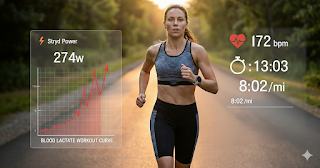
The term “threshold speed” refers to your Lactate Threshold (LT) or Functional Threshold Pace (FTP). This is the fastest speed you can sustain where your body is clearing lactate (a byproduct of carbohydrate metabolism) at the same rate it is producing it.

Think of it as the razor’s edge between sustainable hard running and rapidly fatiguing race-level effort.
Why is this speed so important?
-
Defining Training Zones: Your threshold pace serves as the foundation for setting all your other training zones. Running slower than this pace builds aerobic endurance; running faster develops maximum speed. If your threshold pace is miscalculated, you risk doing your tempo runs too fast (leading to burnout or injury) or your easy runs too slow (missing critical physiological development).
-
Improving Endurance: The goal of threshold training is to push this ceiling higher. By regularly running at or just below your threshold speed, you teach your body to become more efficient at utilizing lactate for fuel and clearing it from the muscles. This adaptation directly translates to running faster for longer periods in races like the 10K, half-marathon, and marathon.
-
Accurate Race Prediction: Threshold pace is often very close to the pace you can maintain for a 50 to 60-minute all-out effort, providing a much more accurate predictor of your current fitness level than simply looking at your
$VO_2$ max.
1. The Gold Standard: Laboratory Testing
The most precise and scientific way to determine your threshold is through a lactate profile test in a sports physiology lab.
The Method: You run on a treadmill, and the speed is gradually increased every few minutes. At the end of each stage, a technician takes a small blood sample (usually from the earlobe or fingertip) to measure the concentration of blood lactate.
The Result: The lab plots the lactate concentration against the running speed. Your threshold speed is identified as the pace at which the lactate level begins to rise dramatically (often defined around
2. The Practical Approach: The 30-Minute Field Test
For runners who lack access to a lab, the 30-Minute Field Test, popularized by coach Joe Friel, provides a highly effective and easily repeatable method.
The Method: After a thorough warm-up, run for 30 minutes at the maximum, steady pace you can sustain for the entire duration. This should feel “comfortably hard”—an effort level where you can speak only in one or two-word bursts.
The Result: Your average pace for the entire 30-minute effort is considered your estimated threshold pace. If you wear a heart rate monitor, the average heart rate recorded during the last 20 minutes of the effort provides your Lactate Threshold Heart Rate (LTHR), which can be used to set heart rate zones for future workouts.
3. The Estimation Method: Race Pace Correlation
If you have completed a recent race (within the last few months), you can use that result to reliably estimate your threshold pace using popular running calculators or simple rules of thumb.
The Method: Input your recent race distance and time (e.g., a 10K or 15K race result) into an online tool like the Jack Daniels VDOT calculator.
The Result: These calculators apply physiological formulas to your race time to determine your equivalent VDOT score, which then translates directly into an estimated “Threshold Pace” (T-pace) that is mathematically modeled to be your functional threshold. This method is the easiest way to get started and requires no separate testing effort.
Ready to achieve your personal best, guided by a coach who understands running from the inside out? Hire Coach Burger , an elite private running coach and retired Doctor of Chiropractic, who combines championship-level training with a professional mastery of human biomechanics.
Coach Burger brings an unparalleled understanding of functional movement and injury prevention to every session. This clinical approach ensures that not only do you train harder, but you train smarter and safer. Coach Burger’s core coaching philosophy is that most runners run too hard on their easy days and too easy on their hard days, ultimately failing to maximize their potential.
This strategic and biomechanically sound methodology yields exceptional results across all disciplines: Coach Burger’s athletes include twelve State Champion hurdlers, a State Champion 4x800m Relay Team, and eleven All-State distance runners (XC, 1600m, 3200m) as well as recreational runners from the 5k to the marathon. Whether you are targeting a marathon, improving track speed, or seeking an injury-proof running career, choose the coach with the clinical expertise to build you into a true champion.
You can reach Coach Burger at [email protected]. Look for his website runnersedgecoaching.com to launch soon.